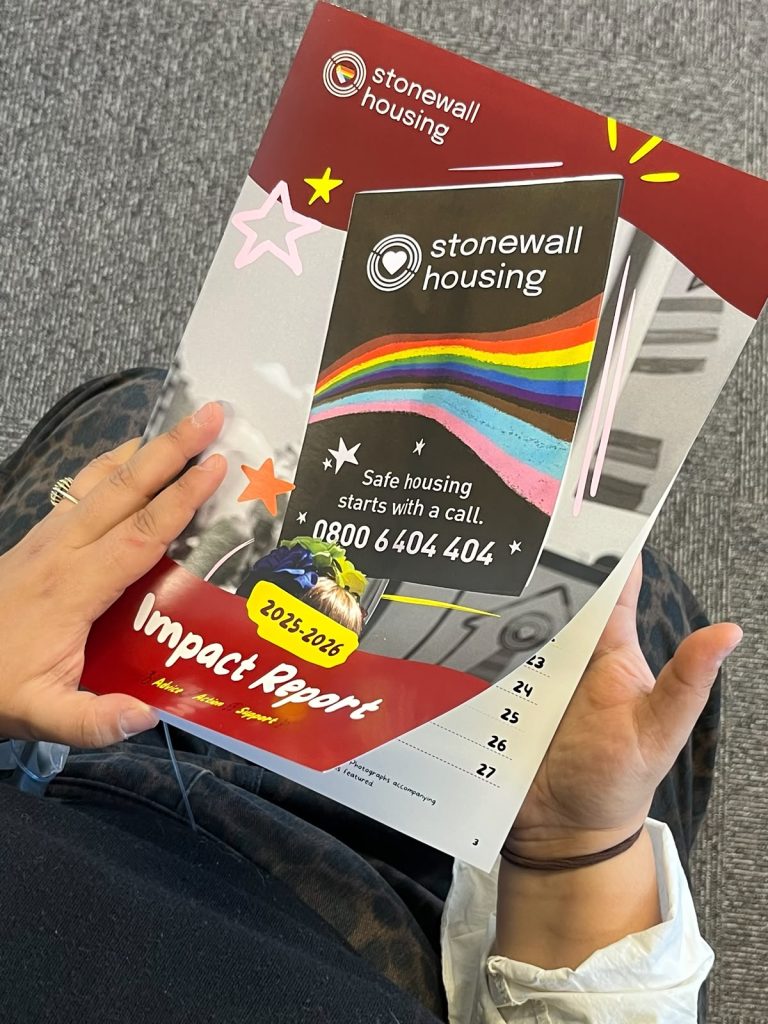


Today, we launched our Impact Report 2025–26 in a room packed with the people who make our work possible. It was an afternoon of honest conversation, shared stories and genuine warmth and we are still buzzing from it. Each year, this report acts as a state-of-the-nation snapshot of LGBTQ+ homelessness. As the only UK charity supporting LGBTQ+ people of all ages facing homelessness, we see a part of our community that goes overlooked and uncounted far too often. Bringing everyone together in one space reminded us just how many people are ready to stand in their corner.
For the third year running, our friends at Monzo generously opened their doors to us. Sector experts, supporters, partners and colleagues gathered to hear from our community, celebrate what we have achieved together, and look honestly at the hurdles ahead. We were thrilled to welcome activist, educator and TEDx speaker Eva Echo back as our host. Eva chaired a panel with colleagues from across Stonewall Housing, bringing the human stories behind this year’s data to life. Our frontline team shared what they are seeing day to day, reflected on the shifting landscape of housing insecurity, and spoke about how we are partnering with communities to build lasting change.
The chats carried on long after the panel wrapped up. It was a powerful reminder of the sheer energy in the room when people rally around this cause. Here is a look at what we found this year.
Our year in numbers
-
- 65 referrals every week. Behind every single one is a person who has been made homeless, is fleeing abuse, or no longer feels safe in their own home.
- 3,422 people supported across our services this year.
- Around 63 advice line calls a week—that is roughly nine people reaching out every day.
- 81 people a quarter coming through our drop-ins, up from 54 last year.
- 100% of residents who completed their stay and move-on plan moved into stable, private rented homes.
What we saw this year
-
- Family rejection is still pushing people out. Over half of the residents in our supported accommodation came to us after experiencing abuse from parents or close family, usually triggered by their sexuality or gender identity.
- Trans and non-binary people are bearing the brunt. Following the Supreme Court ruling in April 2025, many trans people told us they were no longer sure which services they could safely turn to. Over 60% of our supported accommodation residents are trans.
- Private renting is slipping further out of reach. Since the Renters’ Rights Act came in, more landlords are demanding guarantors and high incomes. Many of the people we support have no family safety net to fall back on, leaving them locked out of the market.
- Mental health runs through everything. A massive 83% of people referred to our mental health advocacy service had no existing support in place, while long NHS waiting lists leave people stranded when they are at their most vulnerable.
- More people are arriving with AI-written advice. We are seeing more clients come to us—and their local councils—armed with guidance from ChatGPT. While it can help people find the right words to ask for help, it cannot replace a human who understands housing law and the realities of LGBTQ+ lives.
Inside our specialist services
-
- Supported Accommodation: Our homes in London, Brighton and Eastbourne offer safe, affirming spaces where people can heal and build their independence. This year, we opened dedicated houses for trans residents, and around 1 in 5 of our residents had sought asylum in the UK after fleeing persecution because of their sexuality.
- Over 50s: Older LGBTQ+ people often face barriers shaped by a lifetime of marginalisation. Roughly half of our older clients are private renters—many having bounced between short-term lets for years—and all they want is a place to finally put down roots.
- Mental Health Advocacy: Our advocates walk alongside people dealing with a housing crisis and complex mental health needs at the same time. Tellingly, 68% told us the services they had used before simply were not LGBTQ+ inclusive.
- Domestic Abuse: Our resettlement and advocacy work gives LGBTQ+ survivors in London a clear route to safety. Much of the abuse we see happens at home, often starting right after someone comes out or begins living openly as themselves.
- Drugs and Alcohol Support: We stand by people whose substance use, trauma and housing struggles are deeply tangled together. This year, 24% moved into settled, stable homes, and 22% reduced their substance use.
A massive thank you to Monzo for hosting us once again, to Eva for steering such a thoughtful discussion, to our brilliant panellists, and to everyone who turned up on the day. None of this happens without our staff, our volunteers, and every single person who backs our work.
Together, we are building a future where every LGBTQ+ person has safety, belonging, and a real chance to thrive.